The next generation of Torah typesetting
A typesetting engine built from the ground up for seforim: pages filled to the last line, notes beside their source and full nikud, all the way to Tzuras HaDaf and commentaries in tiers. Full control of every detail, in a workspace that updates before your eyes.
Free to use during the beta. The sample book opens without signing up.
The studio opens on a computer. Send yourself the link, and the sample book opens there at once, with no sign-up.
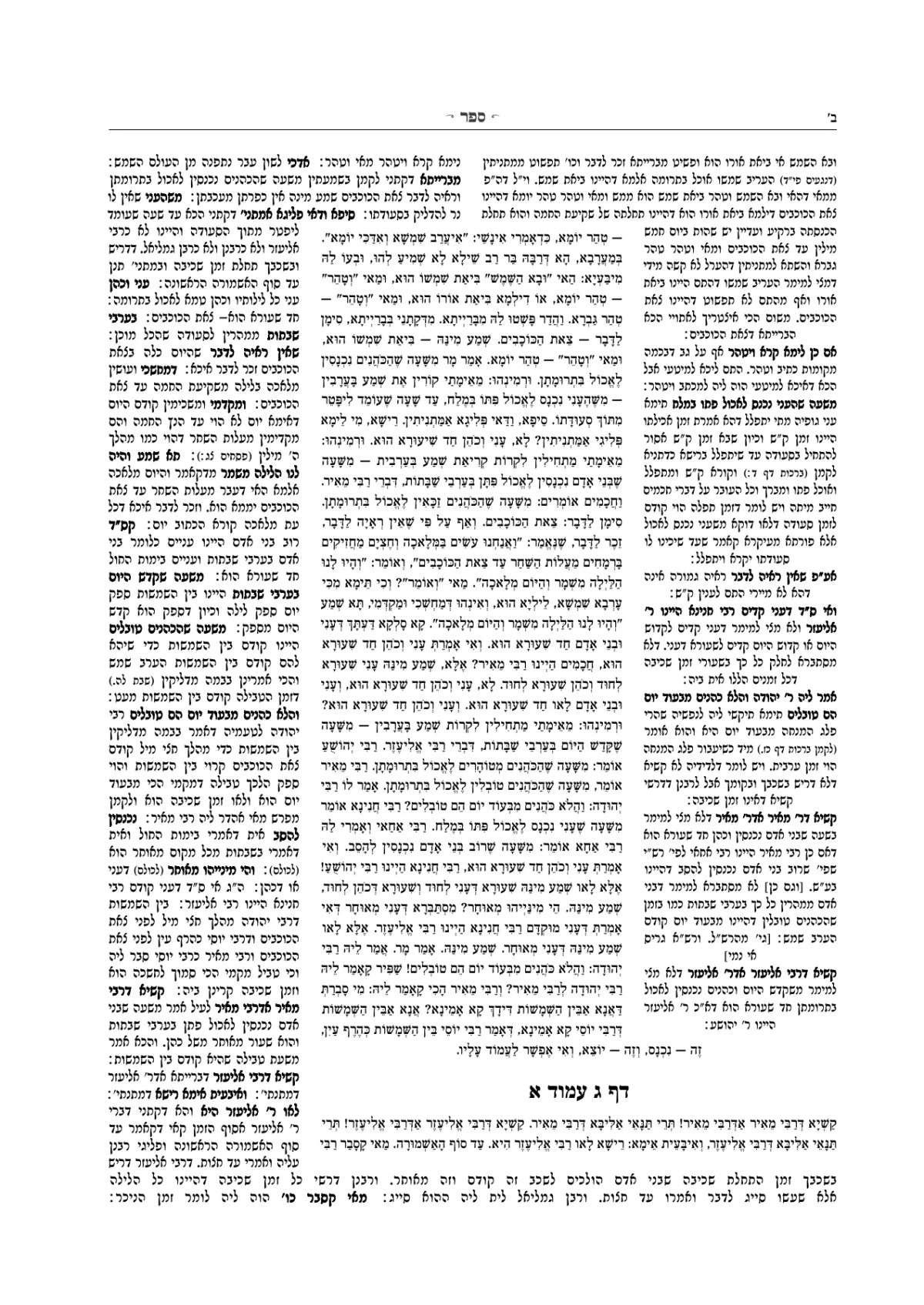
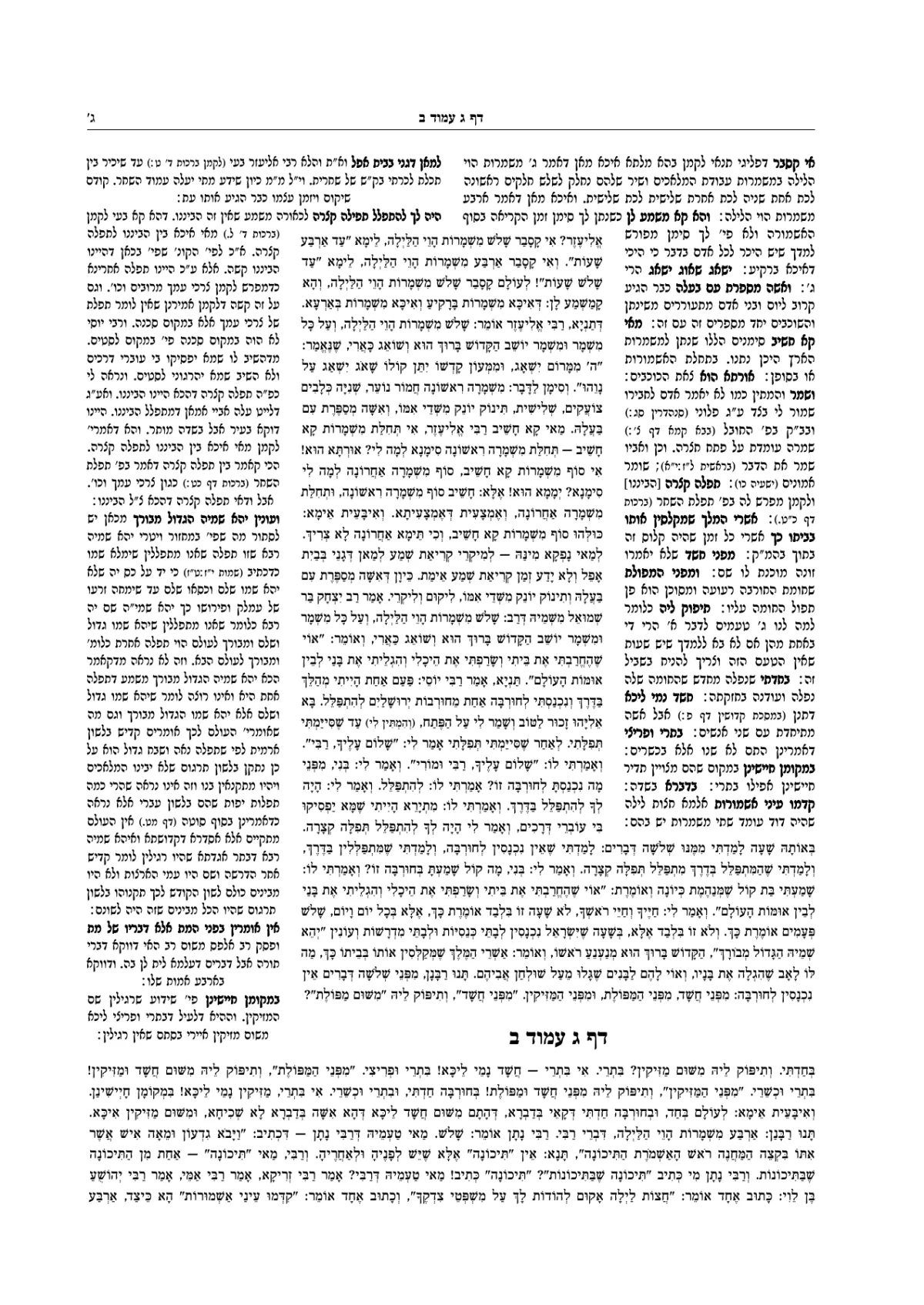
From a simple kuntres to Tzuras HaDaf
The same program and the same steps: a book with headings alone, and a page with six texts. Every page here came out of Ariach as it is.
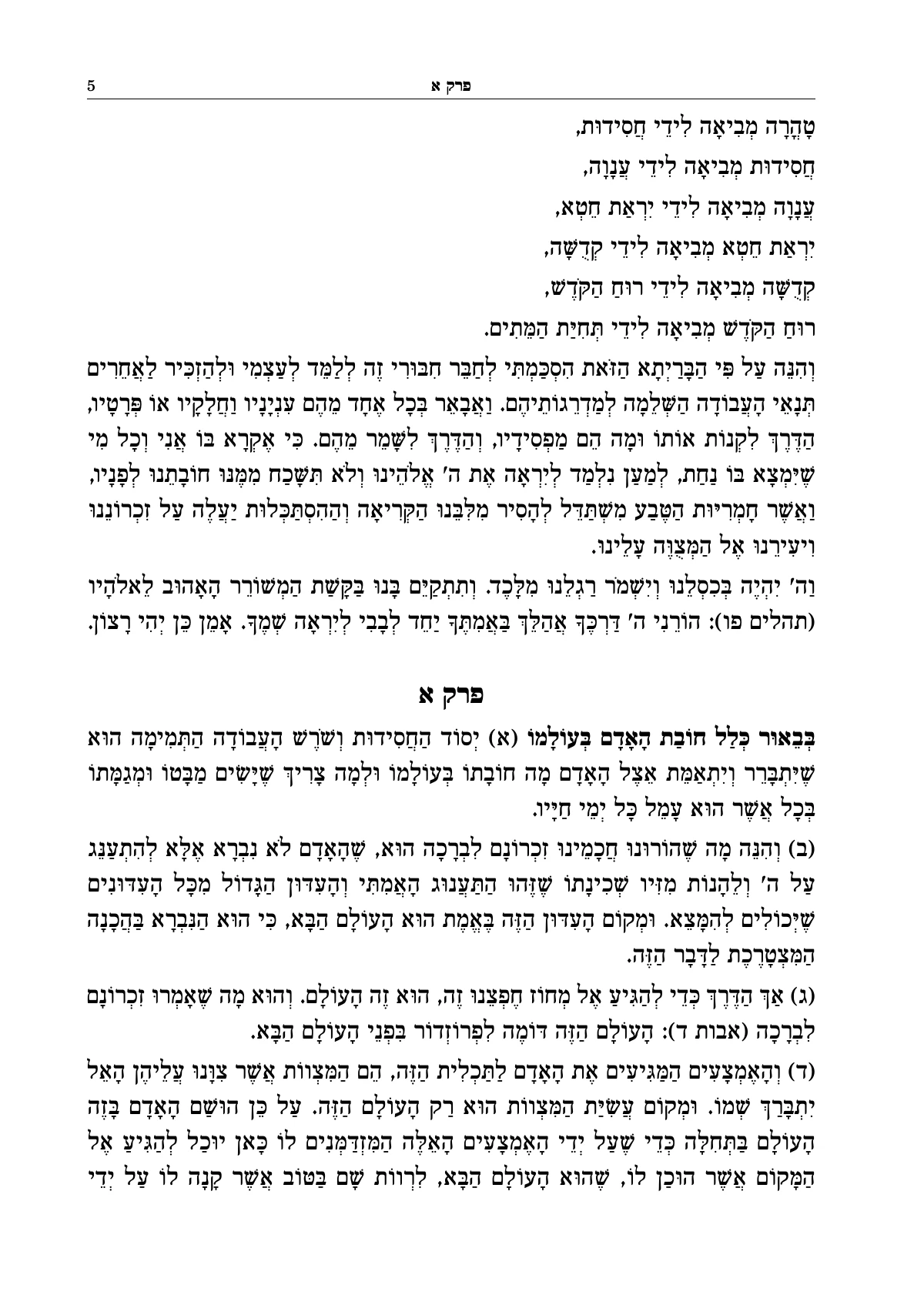
Sefer
Chiddushei HaRamban on Maseches Niddah
Two columns, headings, a running head and page numbers. A sefer of chiddushim, a sefer of mussar, a memorial booklet.
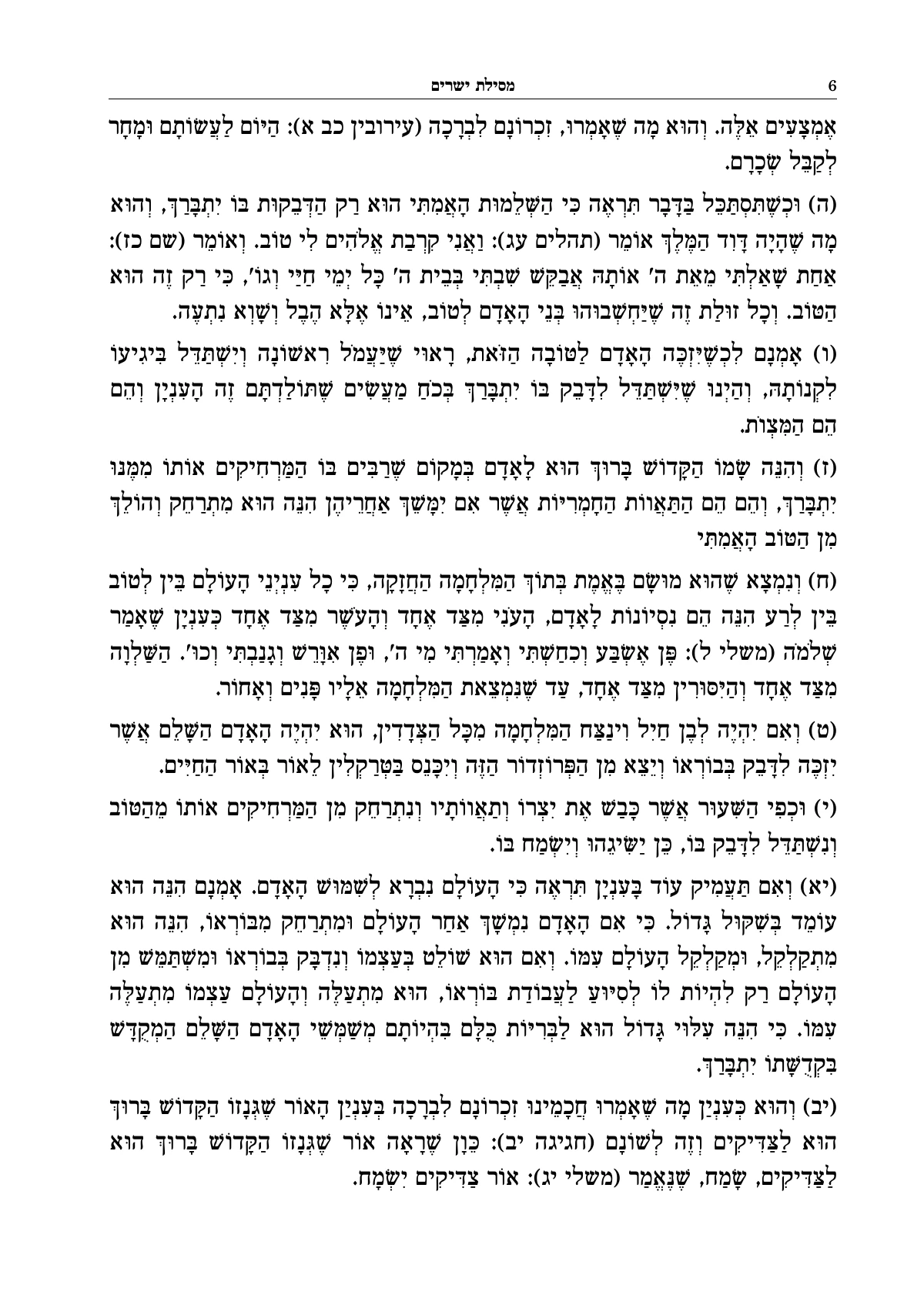
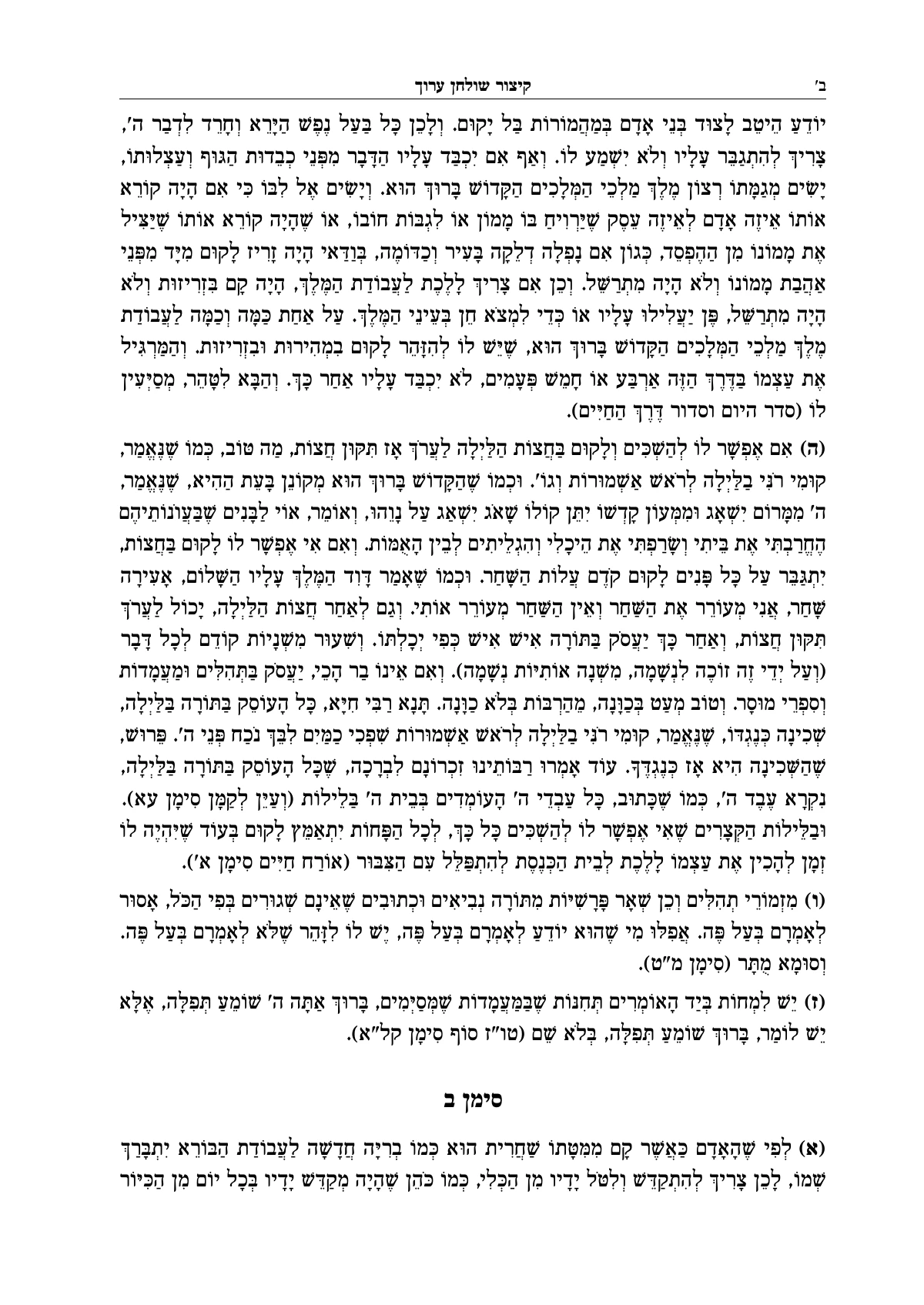
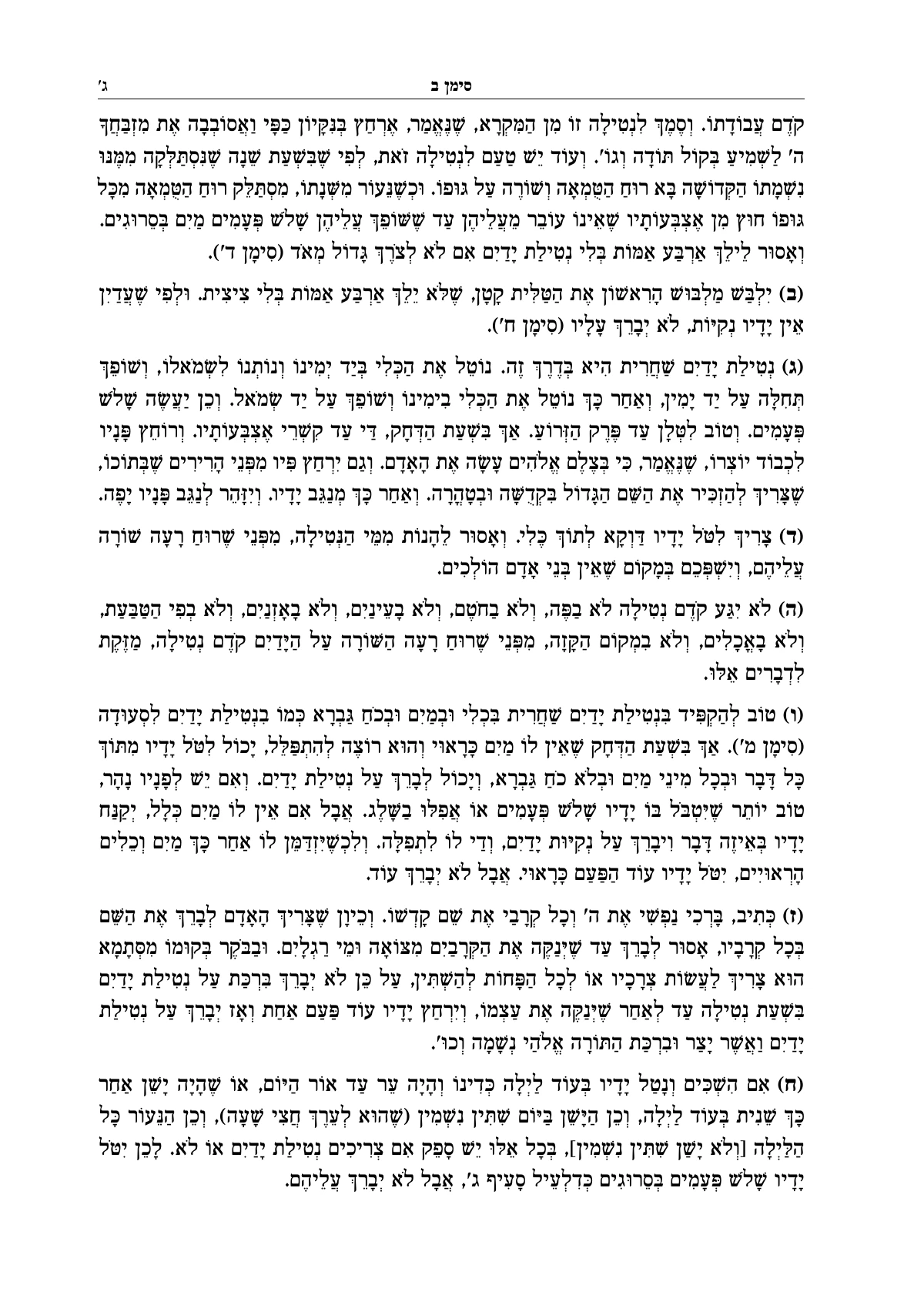
Halacha
Hilchos Shabbos
A heading for every topic, a bold opening for every din, and pages that fill to the last line.
Siddur
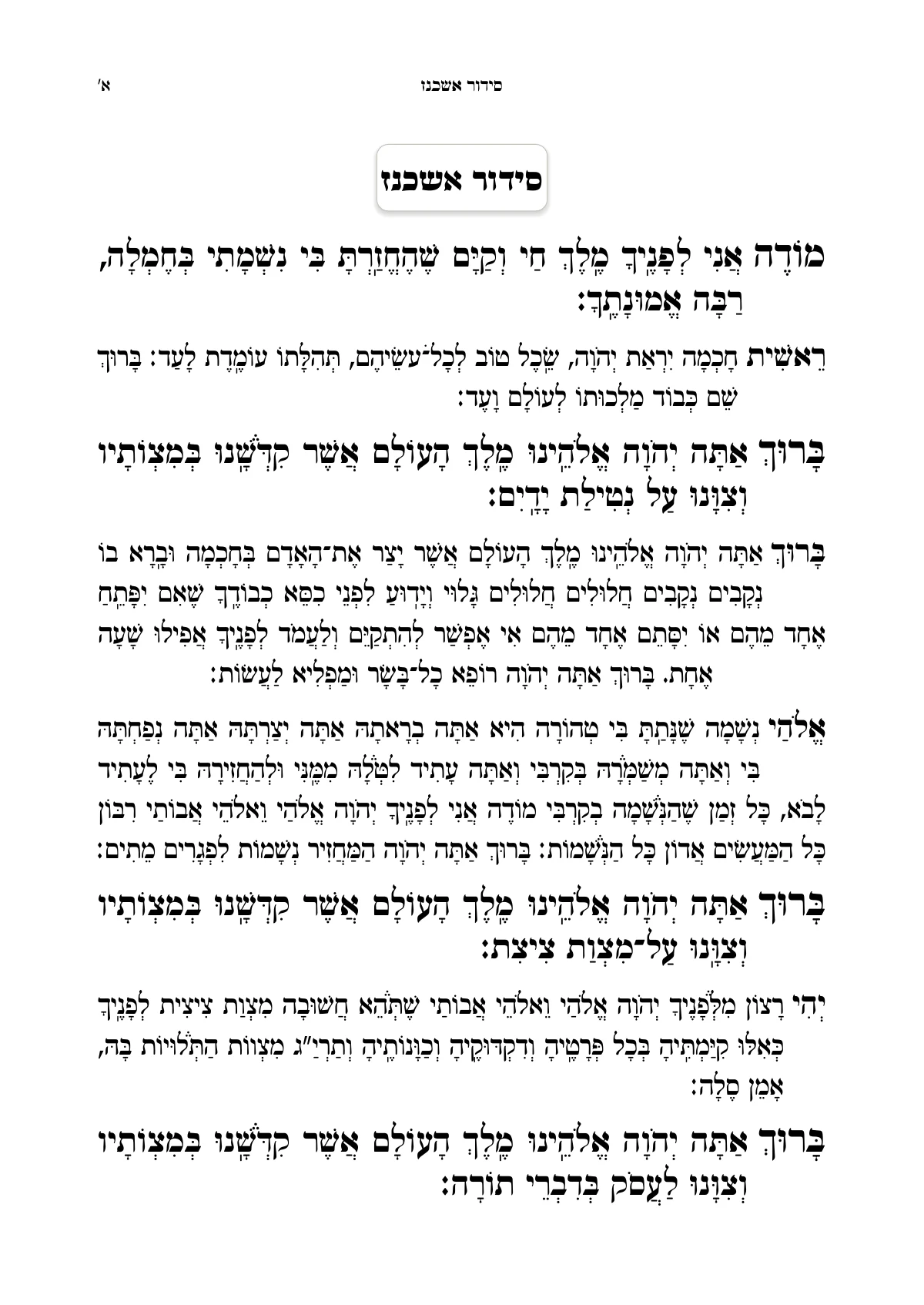
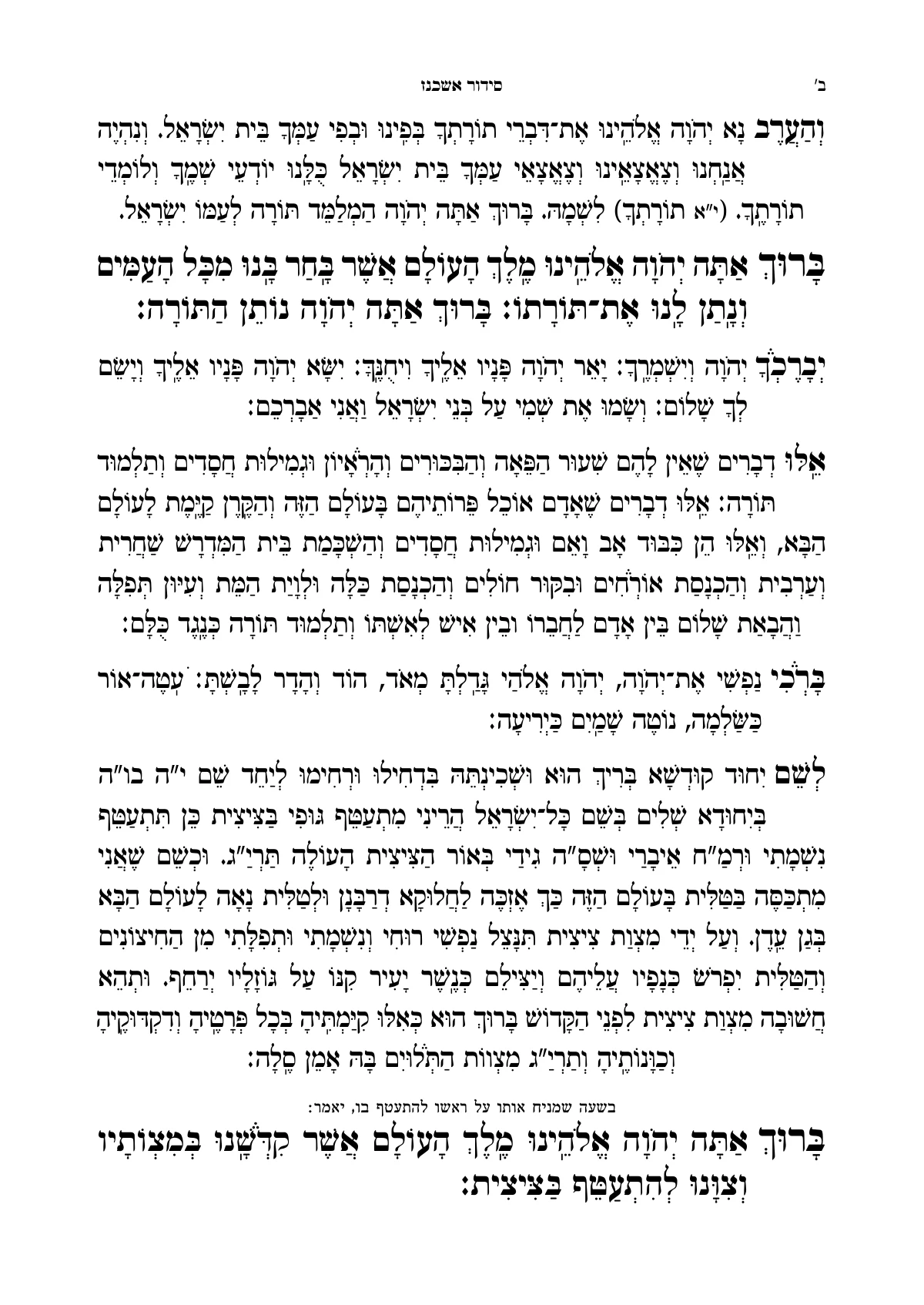
Siddur, Shacharis for weekdays
Large letters with nikud, and line spacing that leaves the nikud and taamim their room.
Tzuras HaDaf
Berachos, with Rashi and Tosafos
The Gemara in the middle, Rashi by the binding and Tosafos on the outside. Four lines of commentary above the Gemara, as in the Vilna printing.
Shulchan Aruch
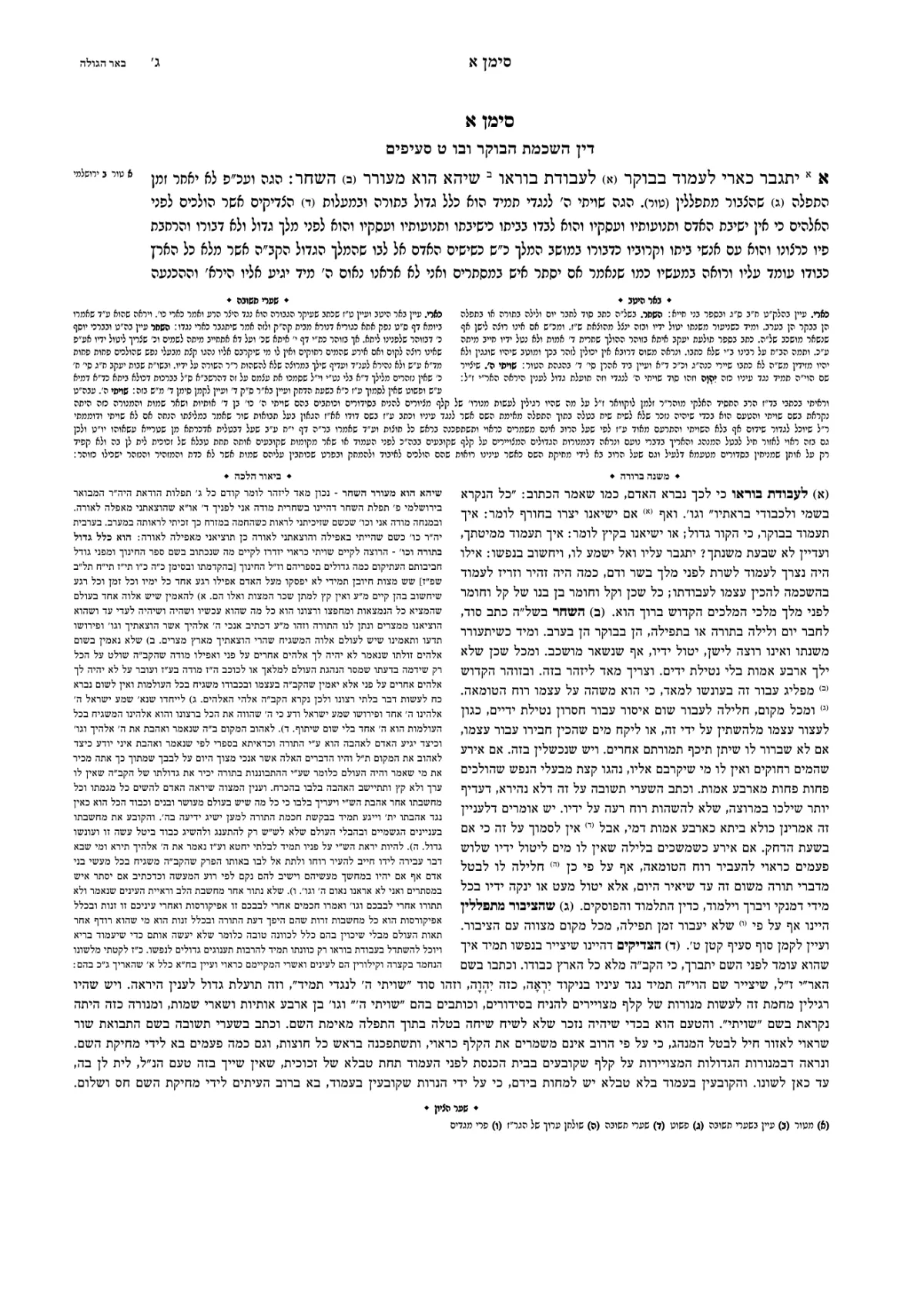
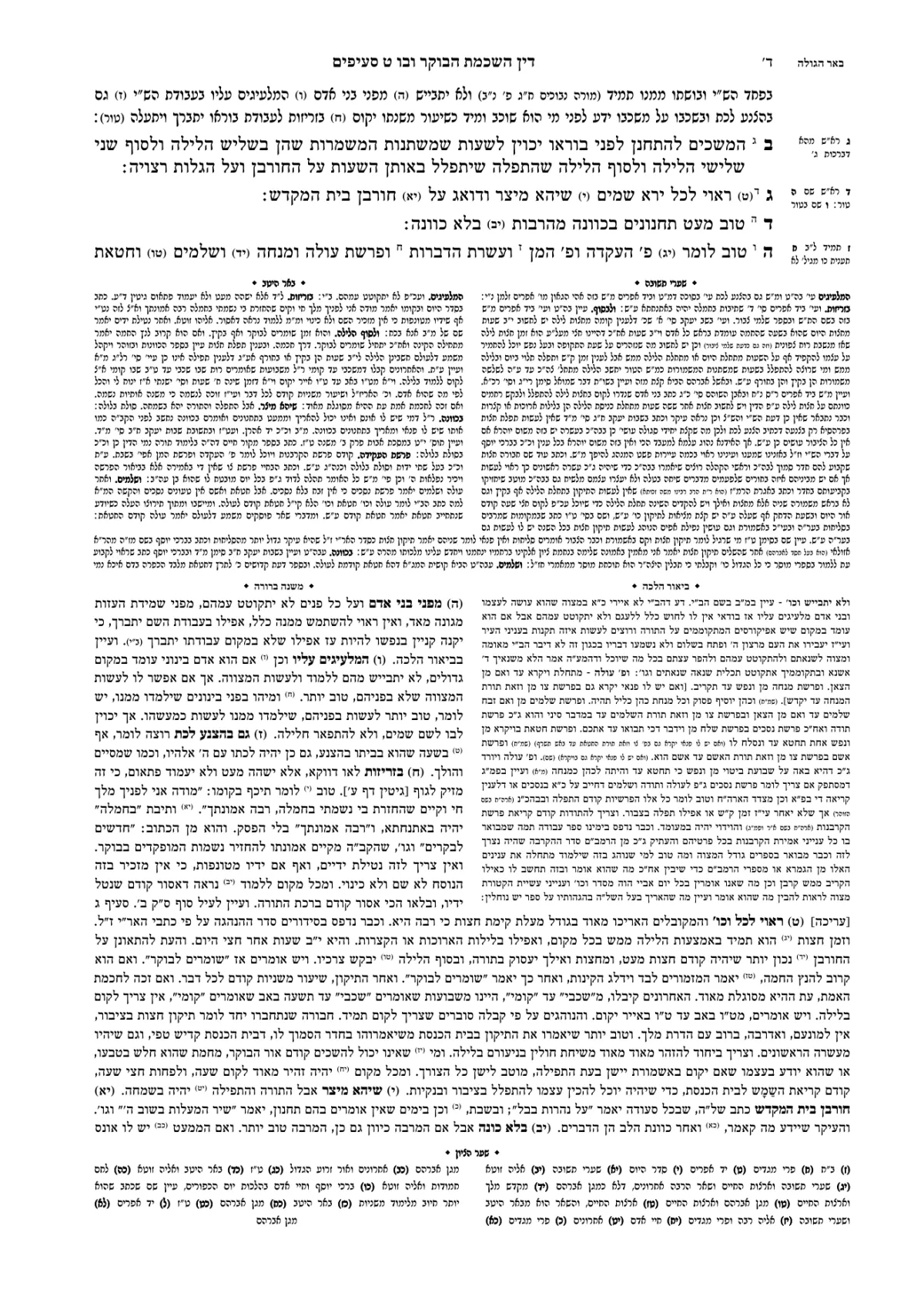
Mishnah Berurah, Hilchos Hashkamas HaBoker
Six texts on one page, each with its own width, font and size.
Mikraos Gedolos
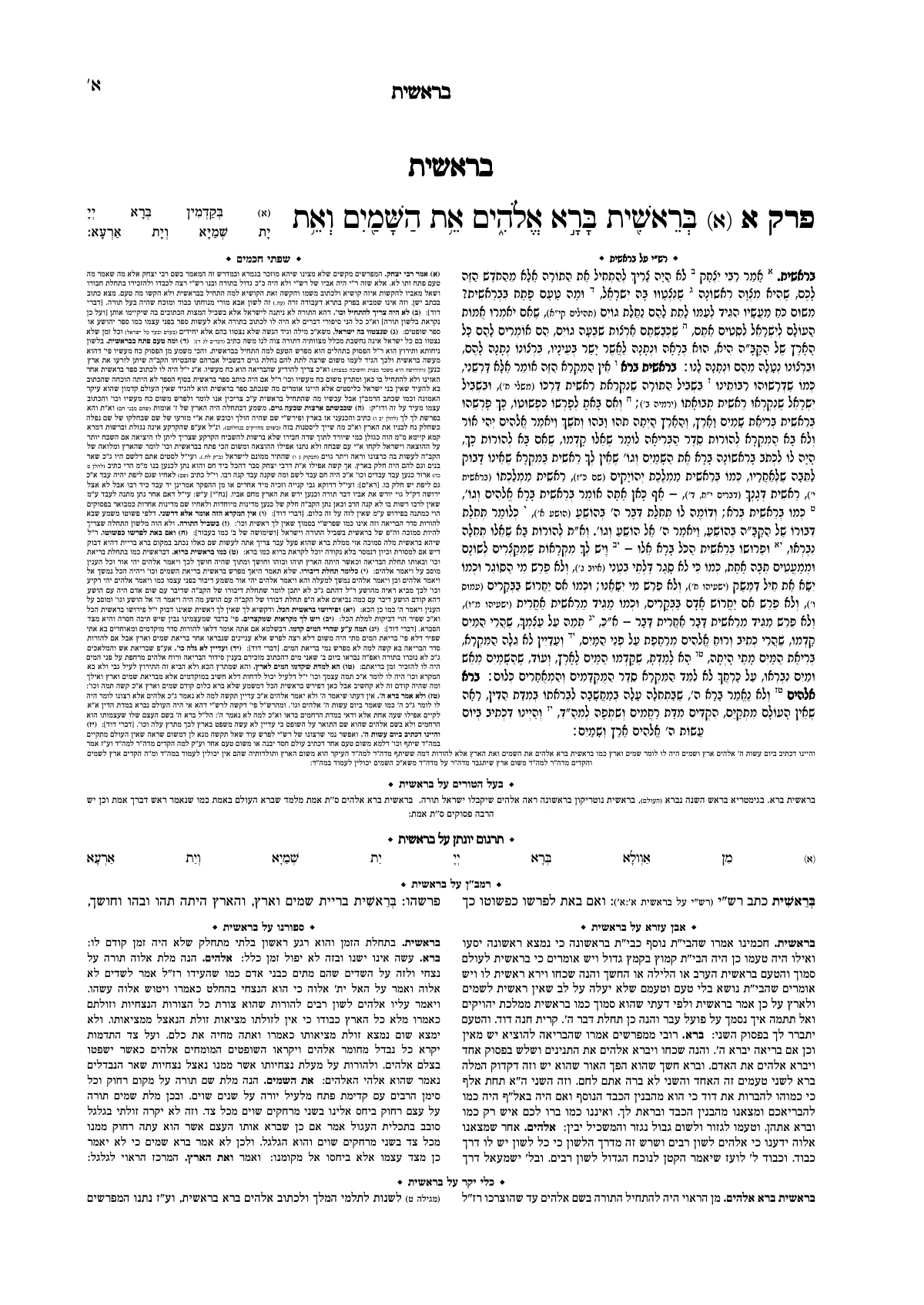
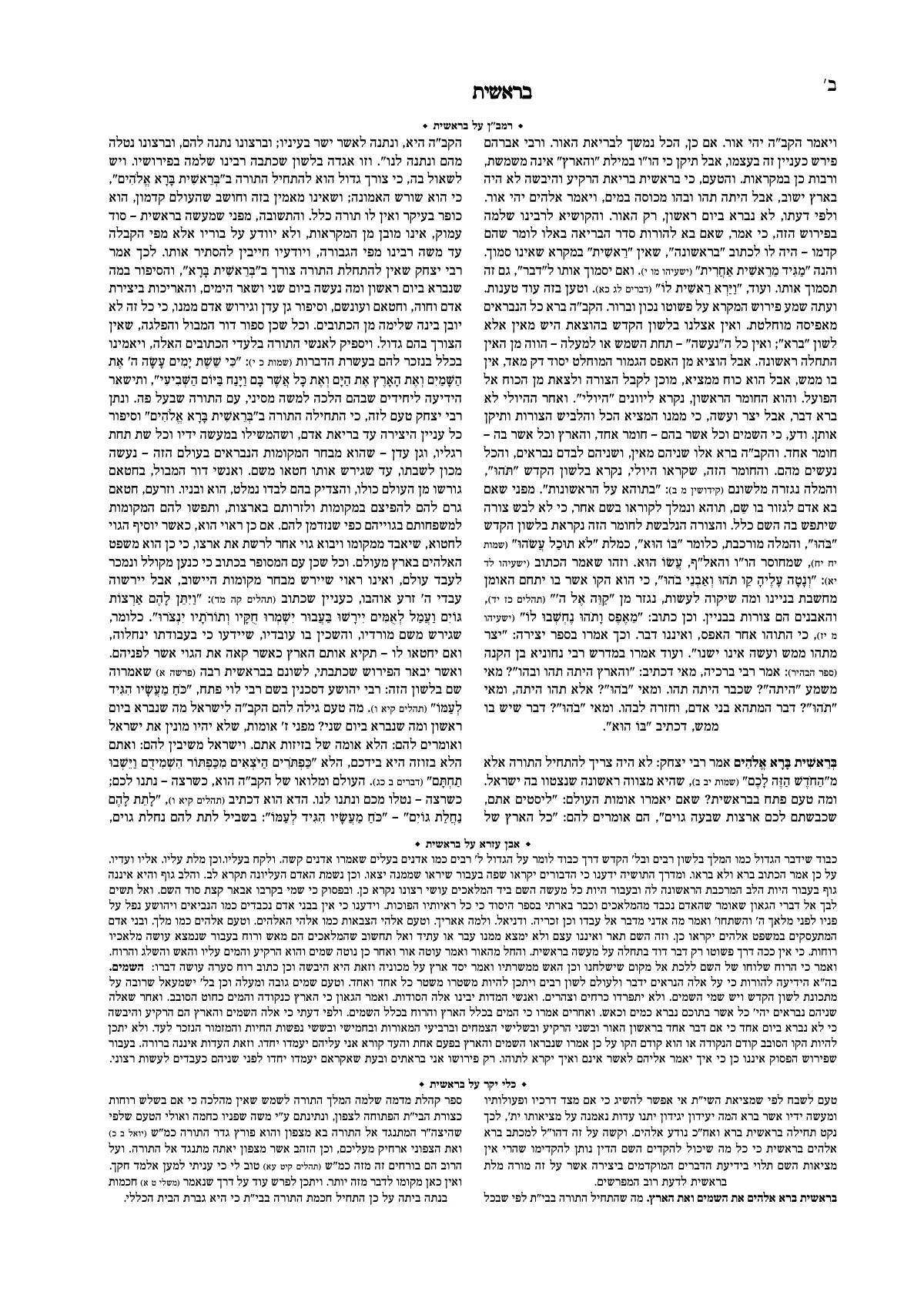
Parshas Bereishis
The pasuk and the targum above, and the commentators in tiers beneath. Up to sixteen commentators around the text.
Type here, and the page sets itself again
This is Ariach's engine, running here, in this page, on a chapter from a sefer on Hilchos Shabbos in its own design: a framed heading with an ornament, inner headings and two columns. Type something, add a note or a section, and switch to one column: the whole chapter is typeset again, at once.
Loading the engine…
Start from the file you already have
Upload your Word file as it is. You see the first page as a book while it is still importing, and you choose a design for it.
- Word footnotes
- Become notes on the page, each beside its word.
- Headings and styles
- Headings stay headings, even when they are only bold and large. Word's character and paragraph styles become the book's styles.
- A commentary in a separate file
- Each dibbur hamaschil is placed beside the word it explains. Where the program is not sure, the spot is flagged for you to check, not guessed in silence.
- From Otzaria
- About 8,500 seforim. A masechta with Rashi and Tosafos opens by itself as a daf of Gemara, and a Chumash opens with Onkelos.
Or from the Otzaria library: about 8,500 seforim, with the commentaries you choose.
Designs that look like a print shop's
Ready-made designs for the whole book or part of it, title pages, ornaments and frames, a table of contents and a running head. To change anything, edit it right on the page.
Sefer
Oros HaYom
Composed with the help of Hashem
- Table of contentsBuilt by itself from the headings, and adjusted on the page itself: size, columns, what goes between the name and the number.
- Running headThe name of the sefer and the chapter at the top of the page, with numbers in Hebrew letters or as daf and amud, in six places to choose from.
- FontsHebrew fonts for seforim, nikud and taamim, Rashi script, and fonts of your own that you upload to your account.
“Add Rashi from Otzaria,” and it's already in the book
The Assistant knows every setting in the book. It changes the design, adds a commentator from Otzaria, searches and replaces with an approval card, and sorts out flagged pages. Any change it makes can be undone with one click.
- You see exactly what changed: the setting, what it was and what it is now
- A sweeping change to the text is shown for approval before it is made
- A title page and its back from the lines you pasted
For those who typeset seforim for a living
The difference between a book printed from Word and professional typesetting is in the details. In Ariach they take care of themselves, and what you set by hand stays in your hands.
- A page that didn't work out says why
- It is flagged for review with the reason and what you can do: a change of setting that you apply with one click, or the place in the text worth shortening. Nothing is fixed behind your back.
- Layout instructions anchored to words
- End the page before this word, one line less, start on the next page. The instruction stays in its place even after proofreading corrections.
- Dividing the page by dragging
- Drag the bottom of any text on the page itself, and see at once what moved to the next page.
- The whole book at once
- The engine chooses the page breaks of the whole book together: columns that end together, no orphan lines, and full pages.
Proofreading and characters
Four questions about the whole book: text, letters, sources and pages. Findings are grouped by the kind of fix, and source references are checked against Otzaria.
Gershayim instead of quotation marks
רש"י רש״י
A quotation whose wording differs
״מאימתי קורין את שמע בערבין״ · Berachos 2a
Found in Otzaria. The wording in the source is identical.
- Text. Punctuation, gershayim, double spaces and final letters in the middle of a word. Grouped by kind, and you fix 412 with one click or one by one.
- Letters. A character the font doesn't have is drawn from another font, and nikud from another font balances itself.
- Sources. Source references and quotations are checked against the Otzaria library: a source that wasn't found, and a quotation whose wording differs.
- Pages. A page that didn't fill, a note that moved far from its word, and what you can do about each.
Together, and without fear of mistakes
The proofreader, the editor and the book's owner on the same book, at the same time.
שמעון הצדיק היה משירי כנסת הגדולה. הוא היה אומר: על שלשה דברים העולם עומדעומד, על התורה ועל העבודה ועל גמילות חסדים.
Joseph, proofreader, suggested adding a comma
- Several people on the same book. They work together at the same time and see who is where. The proofreader suggests a correction, and the book's owner approves it with one click.
- Every action can be undone. Text, settings and layout instructions: one history of up to 500 steps, with a name for every step.
- A print version. Save a version, mark it for print, and download a PDF from it even after the book has kept changing.
A file that's ready for the print shop
The PDF is produced on the server, identical to the pages on the screen: with bleed and crop marks, in four colors or black only, single pages or spreads.
And if the book also needs to come out another way:
Export PDF
After hours of hard work trying to lay it out in Word, within a few minutes I had the result of a finished book, and it made me want to put in the effort and bring it out into the world.
And a few more things that save work
- Search that understands Hebrew
- Finds a word with nikud, in full or short spelling, and with prefix letters. When you replace, the nikud is kept.
- Pages from an image
- A part in which every page is an image, like a scanned haskamah. And a background for the title page or for all pages.
- Paragraphs side by side
- Up to four, for the original and a translation, or for two versions.
- Paragraph numbering
- Halacha 1, 2, 3, with a design of its own, inside the notes too.
- Overview
- The whole book as small pages. Click a page to open it for reading.
- Preview
- The pages alone on the whole screen, the way they came out of the print shop.
What isn't here yet. So you don't find out in the middle of a book:
- Images inside the running text
- Tables
- An index that builds itself
- Working on a phone: the studio needs a wide screen
Questions before you start
Have a question? We're glad to help.
About your book, a problem or an idea. We usually answer within a business day.
I've never typeset a book. Will I manage?
Yes. Upload the file, choose a ready-made design or ask the Assistant for one, and fix what you don't like. Every action can be undone. The sample book is open without signing up, so you can try it before you decide. The Assistant and PDF download open with an account, and the account is free.
I've been typesetting for years. What is here for me?
A book that is laid out all at once and stays in order after proofreading. A page that didn't work out says why, and what you set by hand is anchored to words and doesn't move when the text changes.
How much does it cost?
Nothing right now. Ariach is in beta, and it is free to use. The Assistant has a weekly quota, so there is enough for everyone. We'll announce any charge in advance.
Does the book stay mine?
The book is kept in your account, and only the people you added can see it. At any time you can export it to Word or to Otzaria, or delete the account.
Do I need to install anything?
No. Ariach opens in the browser on a computer, and also works through NetFree.
Open the sample book, and change something in it
The sample book opens at once, with no sign-up. When you want to typeset a book of your own, open an account and upload the file.
A question before you start? Write to us, and we usually answer within a business day.